
2024 Review of Top 12 Corporate Learning Management Systems
2024's Top 12 Corporate Learning Management Systems reviewed! We compare 12 LSM based on key features, cost, and integration. Discover the best fit for you.

2024's Top 12 Corporate Learning Management Systems reviewed! We compare 12 LSM based on key features, cost, and integration. Discover the best fit for you.
With hundreds of corporate learning management systems (LMS) on the market, choosing the right one can be difficult. Each platform promises unique features, making it hard to know which truly fits your company’s needs. This guide simplifies the search by analyzing the best corporate training LMS platforms, and breaking down their strengths and weaknesses. With clear insights, you’ll have everything needed to make an informed choice.
| LMS | Overview | Key features | Pricing | Review | Integration |
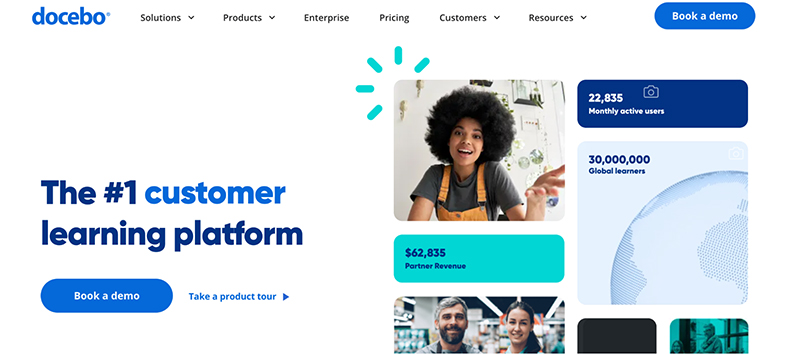
| 1. Docebo  | Cloud-based LMS for formal/informal learning across industries. | AI-driven content, customizable paths, advanced analytics, e-commerce, Salesforce, and Zoom integration. | Starts at $1,600/month | User-friendly, extensive features; pricing complexity noted. | Salesforce, Zoom, MS Teams, Google Workspace |
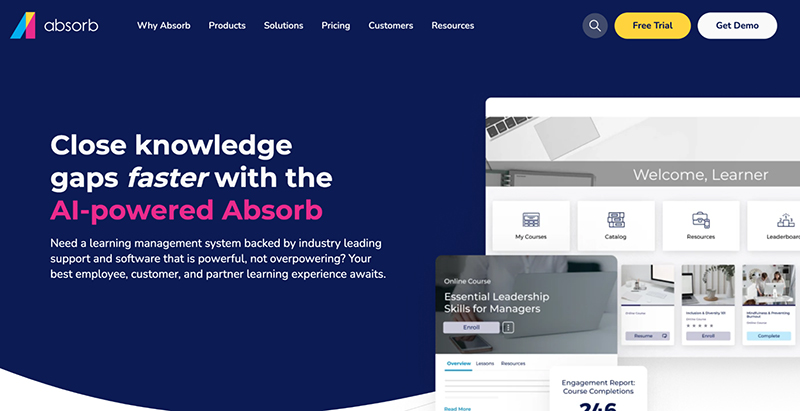
2. Absorb LMS | Modern LMS for corporate training; ideal for medium-large businesses. | AI content delivery, mobile support, analytics, e-commerce, custom branding. | Available upon request | Intuitive, advanced features; limited customization options. | Salesforce, Shopify, Zoom, MS Teams |
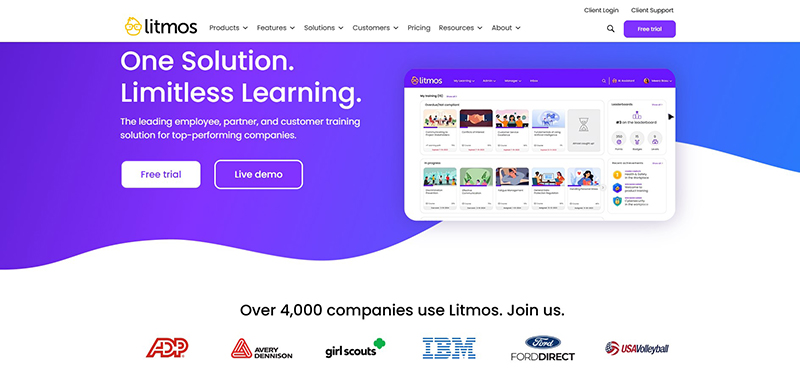
3. SAP Litmos | Versatile LMS for compliance and onboarding; suitable for regulated industries. | Course library, mobile-friendly, gamification, compliance management, SAP integration. | Available upon request | Ease of use, comprehensive courses; lacks advanced reporting. | Entra ID, Salesforce, Zoom, ADP |
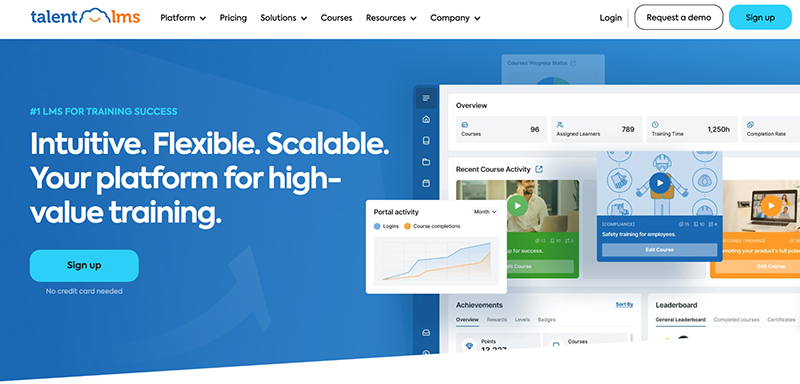
4. TalentLMS | Simple, efficient LMS for SMBs; affordable with Zoom integration. | Course authoring, assessments, branding, e-commerce, Zapier integration. | Free for 5 users; starts at $69 | Intuitive, affordable; limited advanced customization. | Zoom, Slack, Salesforce, Google Workspace |
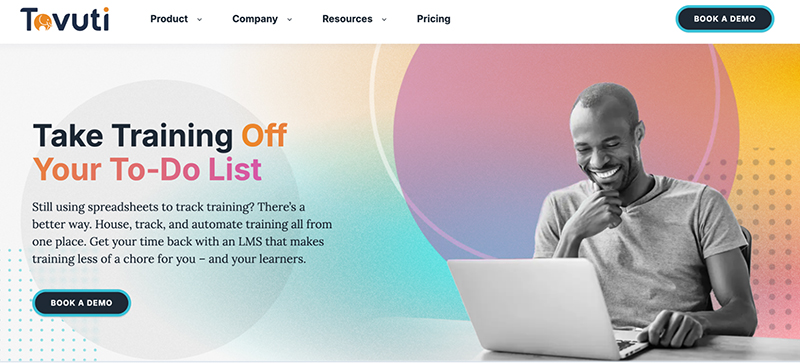
5. Tovuti LMS | All-in-one LMS for creating, tracking online training; supports businesses of all sizes. | Course authoring, interactive content, gamification, event management. | Starts at $8/user/month | Comprehensive features, good support; some learning curve. | Zapier, Zoom, Salesforce, Google Analytics |
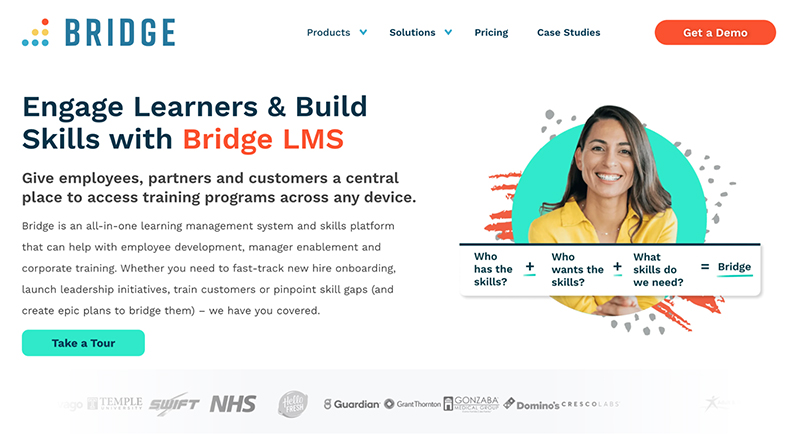
6. Bridge | Focused on employee development with performance management tools. | Course management, performance tools, surveys, analytics, HR integration. | Available upon request | Engaging focus; limited customization noted. | Salesforce, MS Teams, Google Workspace |
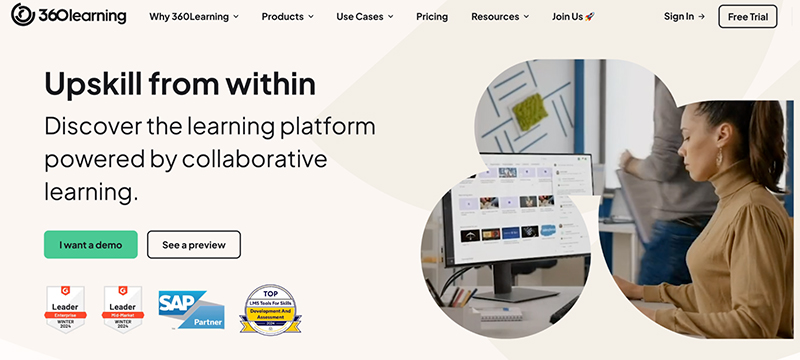
7. 360Learning | Collaborative LMS promoting peer-driven course creation; ideal for knowledge-sharing cultures. | Collaborative courses, forums, feedback, mobile access. | Starts at $8/user/month | Collaborative, easy to use; lacks advanced analytics. | Slack, Google Workspace, MS Teams |
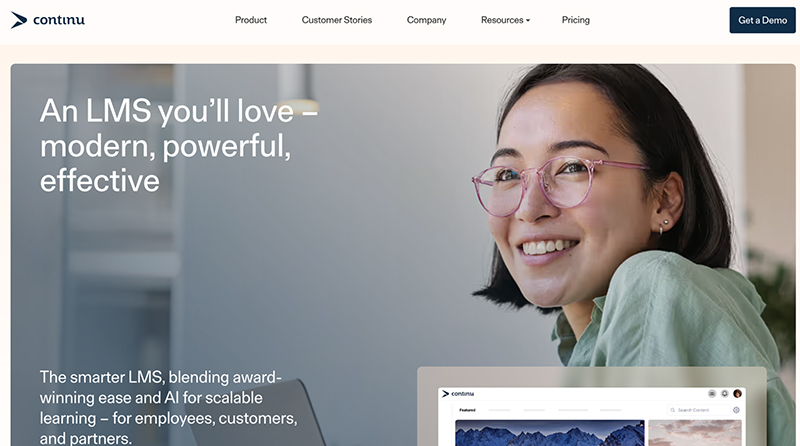
8. Continu | Modern LMS for integration, engagement, lifelong learning; suitable for various training needs. | Content management, workflows, analytics, tool integration, mobile-friendly. | Available upon request | Modern interfaces; may lack intuitiveness. | Slack, Salesforce, Zoom |
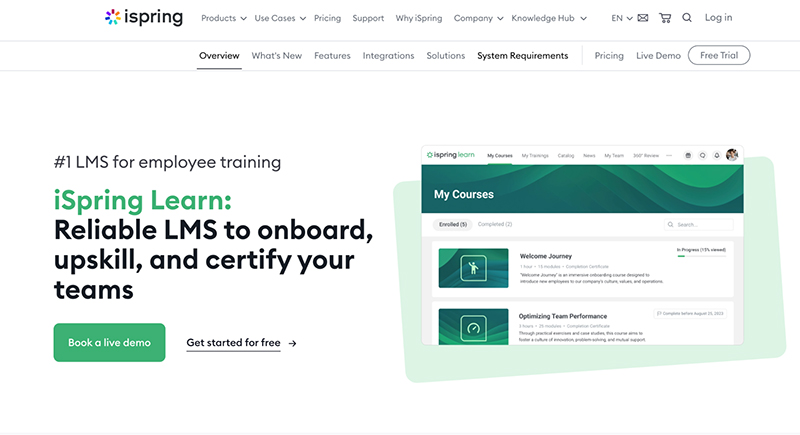
9. iSpring Learn | User-friendly, integrates with PowerPoint; good for SMBs using presentation-based training. | PowerPoint integration, mobile support, reporting, e-commerce. | Starts at $2.29/user/month | Affordable, straightforward; limited customization. | PowerPoint, Google Analytics, PayPal |
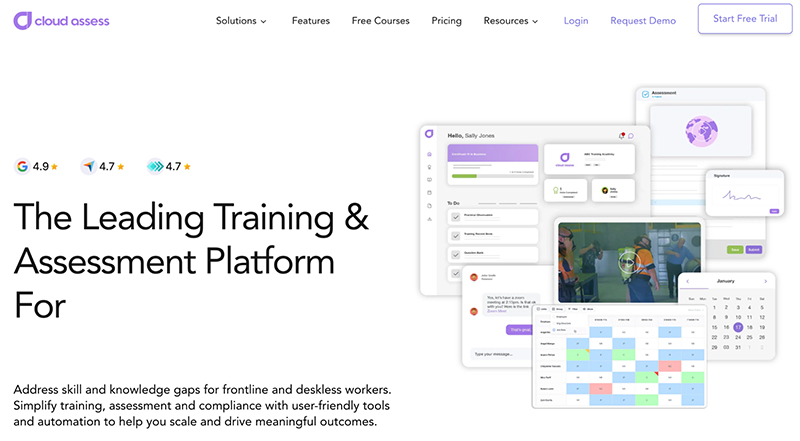
10. Cloud Assess | Assessment-focused LMS ideal for compliance-heavy industries. | Flexible reporting, mobile access, customizable assessments, continuous feedback. | Starts at $50 AUD/user/month | Known for assessments; basic reporting. | Zapier, Xero, QuickBooks |
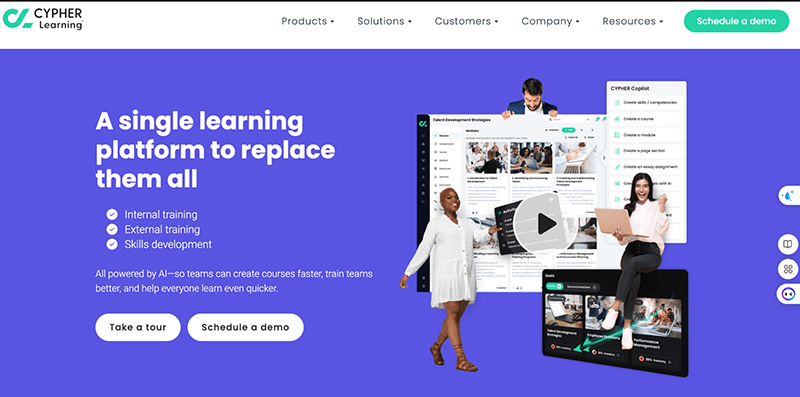
11. Cypher Learning | Flexible LMS focusing on personalized learning, ideal for ongoing professional development. | Custom courses, gamification, advanced analytics, versatile software integration. | Available upon request | Flexible, scalable; setup complexity noted. | Salesforce, Google Workspace, MS Teams, Zapier |
12. Canvas LMS | Robust LMS used in education; effective for corporate training with strong feature set. | User-friendly interface, mobile app, extensive integration, comprehensive analytics. | Available upon request | Easy to use, many integrations; some customer support issues. | Google Workspace, MS Teams, Zoom, Slack |
A corporate learning management system (LMS) is a digital tool companies use to manage and track employee training. It centralizes learning materials, courses, and assessments, allowing employees to access training anytime and anywhere.
Corporate LMS platforms support different formats, like e-learning and virtual classes, making training flexible and accessible. They also provide reports on employee progress, helping managers see skill development and identify areas for improvement.
Learning management systems began as tools for schools, but it didn’t take long for businesses to see their value. With software that makes online learning easier, LMS offers clear benefits over traditional training, particularly in a landscape dominated by remote or hybrid methods.
| Benefit | Description |
| 1. Cost and time efficiency | Reduced training costs: Eliminates the need for physical materials and travel, saving costs. |
| Time savings: Allows employees to learn at their own pace, minimizing downtime. | |
| 2. 24/7 Access to Learning Materials | Flexible learning: Accessible anytime, supporting varied learning styles and schedules. |
| Self-paced learning: Enables revisiting materials for better retention. | |
| 3. Centralized learning repository | Single source of truth: Centralized storage of training resources for easy access. |
| Consistent training delivery: Ensures uniform training across the organization. | |
| 4. Enhanced tracking and reporting | Performance analytics: Monitors progress and assessment scores, offering insights. |
| Data-driven decisions: Uses data to improve training programs. | |
| 5. Improved compliance management | Regulatory compliance: Automates tracking of mandatory training and certifications. |
| Automated reminders: Sends notifications for required renewals. | |
| 6. Personalized learning experiences | Tailored content: Uses algorithms to provide individualized learning paths. |
| Adaptive learning technologies: Keeps training relevant for each learner. | |
| 7. Streamlined onboarding process | Efficient onboarding: Provides immediate access to onboarding materials for new hires. |
| Consistent orientation: Standardizes foundational training for all new employees. | |
| 8. Enhanced employee engagement and retention | Interactive learning features: Adds gamification and quizzes for motivation. |
| Career development opportunities: Promotes growth and increases satisfaction and retention. |
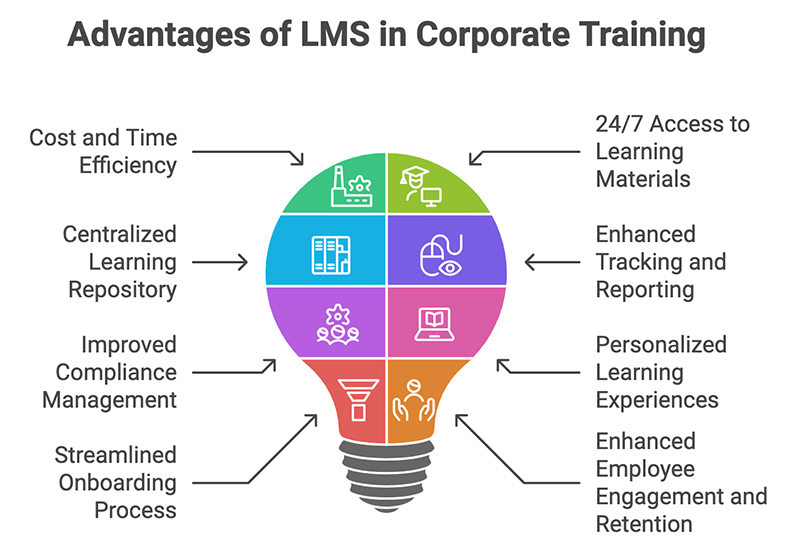
The following list of 12 corporate LMS options is a valuable resource for organizations aiming to enhance their training programs. It highlights key features, helping decision-makers choose the right platform to meet their specific needs.
The cost of implementing corporate learning management systems can vary significantly based on several factors. Understanding these factors can help organizations budget effectively and choose the right LMS for their needs.
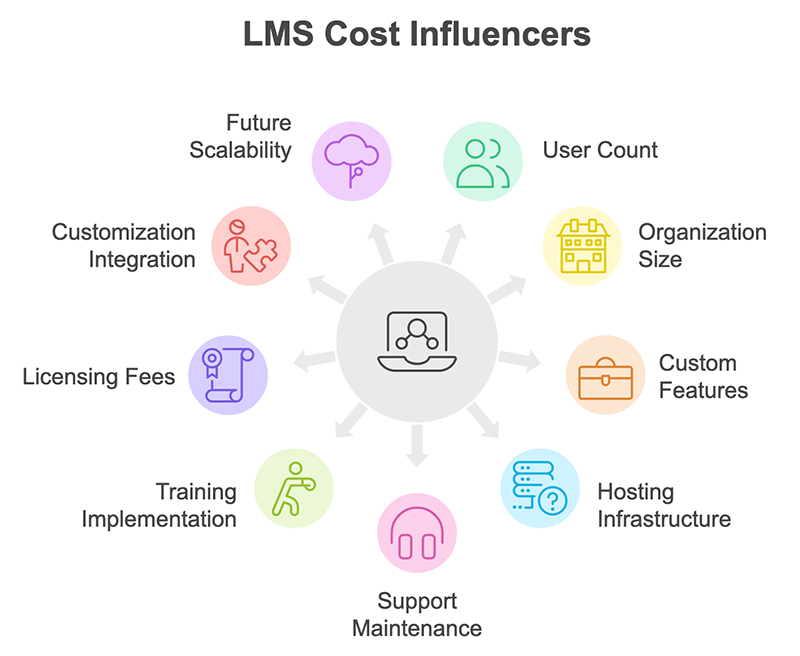
| Cost factor | Description |
| 1. User count | Costs increase with user numbers, as many LMS platforms charge per-user or active-user fees. |
| 2. Organization size | Larger companies often require extensive LMS capabilities, such as detailed reporting and dedicated support, which can raise costs. Solutions that support large-scale, complex training programs are typically more expensive. |
| 3. Custom features and functionality | Advanced functions like gamification, in-depth analytics, and mobile access come at a premium. |
| 4. Hosting and infrastructure | Cloud-based LMS options include hosting in subscription fees, while on-premises setups need upfront investments in servers, infrastructure, and ongoing maintenance. Cloud is often preferred for scalability, while on-premises may suit organizations with robust IT support. |
| 5. Support and maintenance | Costs vary widely; some companies may need 24/7 dedicated support, while others only require email-based support. Higher support levels like dedicated account managers typically come with additional fees. |
| 6. Training and implementation costs | The initial setup includes configuring the LMS, training users, and onboarding processes. Fees can cover setup support, staff training sessions, and admin onboarding, which are vital for a smooth start without budget overruns. |
| 7. Licensing fees | Licensing structures vary. Some LMSs charge per user, while others charge per course or by usage. |
| 8. Customization and integration costs | Tailoring an LMS to specific needs or integrating with existing systems like HRIS (Human Resource Information System) or CRM (Customer Relationship Management) can incur substantial costs, as these often require additional development resources. |
| 9. Future scalability | Many corporate LMS platforms charge extra for scaling, such as adding users or features. Companies should look for flexible pricing plans that accommodate growth to keep future expansion costs manageable. |
To choose the LMS that is the best fit for your business, it’s essential to consider several key features that can significantly impact the effectiveness and efficiency of your training programs.
An intuitive, easy-to-navigate LMS can make all the difference in user engagement. When learners don’t need extensive training just to get started, they’re more likely to stick around. A platform that prioritizes user experience doesn’t just improve learning retention; it encourages regular use and leads to higher course completion rates.
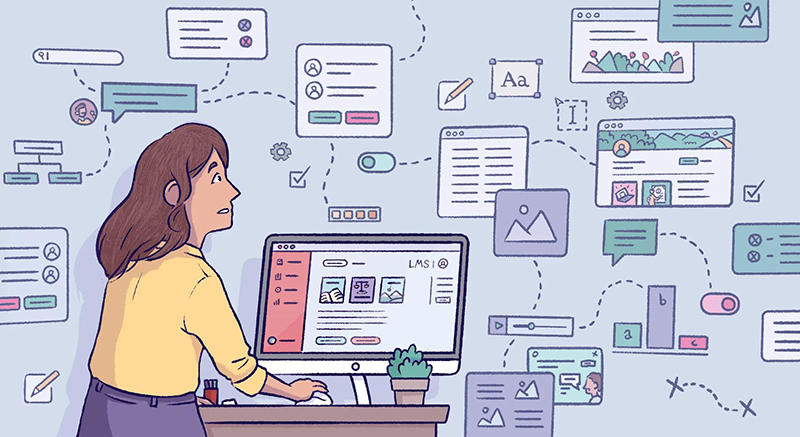
Every organization is different, and so are their educational requirements. Customization allows you to shape corporate learning management systems to fit your goals, branding, and unique requirements. But it’s not just about what works today—scalability is key.
As your organization grows, your LMS needs to evolve as well. A scalable system can keep up with more users and content without a hitch, saving you from costly upgrades down the line.
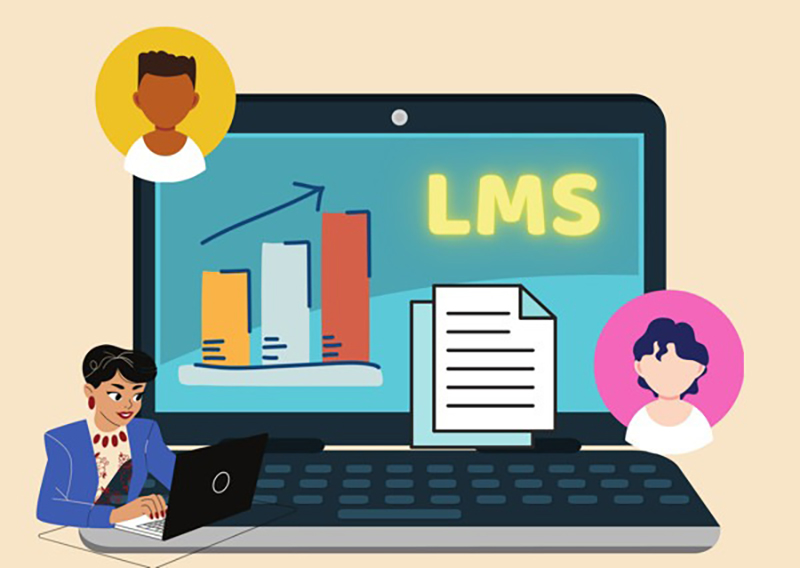
Your LMS shouldn’t operate in a vacuum. It needs to play well with other systems, whether it’s HR software, CRM platforms, or content repositories.
Good integration capabilities mean you’ll have seamless data flow, reducing the burden of manual tasks and giving you more insightful reporting. With an LMS that connects to your existing tools, everything just runs smoother.
Corporate learning management systems should do more than just deliver content—it should make creating and managing that content a breeze. Look for features that support a range of materials, from videos to quizzes, all organized in a way that’s easy to update and adapt.
A platform that lets you keep your course catalog fresh and relevant will make a real difference in engaging learners and meeting compliance needs.
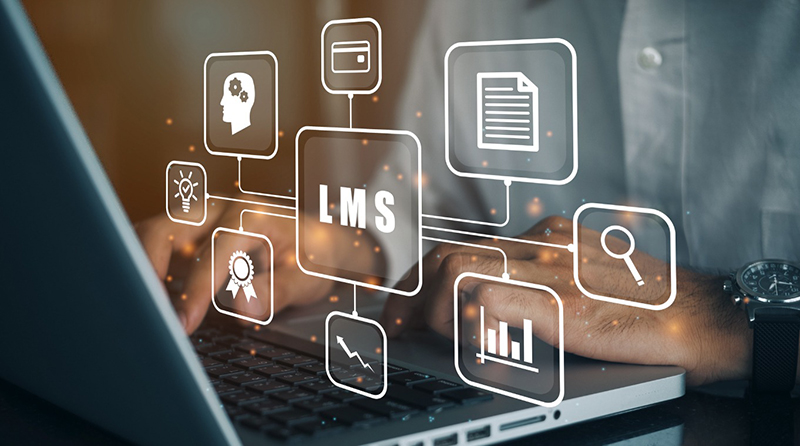
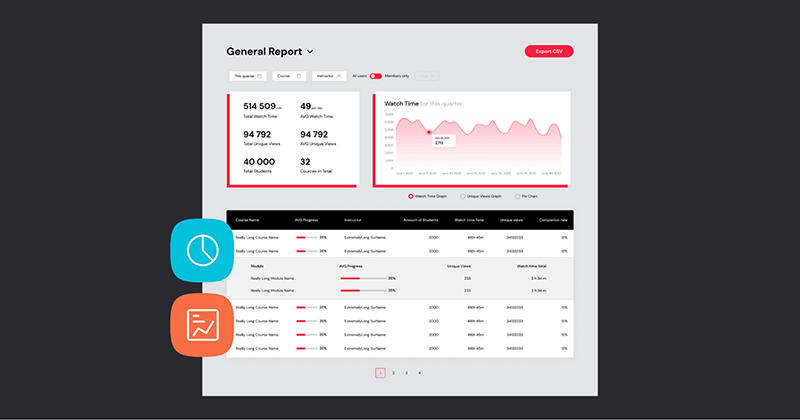
To know if your training is working, you need solid reporting tools. An LMS should come with customizable dashboards to track learner progress and key performance indicators (KPIs).
With insights like these, you can make informed decisions, spot areas for improvement, and showcase the ROI of your training programs.
Having reliable support when you need it can make LMS implementation and daily use a lot smoother. Look for a provider that offers robust customer support, from tutorials and webinars to dedicated account managers.
A supportive LMS partner ensures you’ll have help at every step, whether you’re troubleshooting or just getting set up.

A good LMS should come with solid data protection protocols to keep employee information safe. Look for features like encryption, secure access controls, and regular security updates—it’s peace of mind for you and your team.
Beyond security, compliance features are essential, especially if your industry has specific certification requirements. An LMS that helps you manage certifications and stay on top of regulatory standards keeps your training program both effective and compliant.
In 2024, some exciting trends are changing the world of learning management systems (LMS). Let’s check some popular trends to adapt them to your current LMS systems and stay ahead of the curve:
AI is transforming every aspect of life, and corporate learning management systems are no exception. It helps LMS platforms create courses faster and personalize learning for each user. This technology also allows for competency mapping, interactive simulations, and tailored upskilling programs, ensuring that content meets individual learner needs.
With AI, companies can keep learners engaged with content that adapts based on user performance and preferences.
Virtual Reality (VR), Augmented Reality (AR), and Mixed Reality (MR) are making training more hands-on and realistic. These tools create realistic training scenarios that enhance practical skills and situational awareness.
By simulating real-world experiences, immersive learning technologies help learners retain information more effectively and apply their knowledge in practical settings.
Microlearning is preferred as organizations seek efficient ways to deliver training content. This approach involves short, focused learning modules that cater to modern learners’ preferences for bite-sized information.
Microlearning boosts knowledge retention and engagement by letting employees learn at their own pace. It’s especially effective in busy work environments where time is tight.

As remote and mobile work continues to grow, so does the demand for mobile-friendly corporate learning management systems. Mobile learning ensures that training is accessible to all employees, regardless of their location, thus supporting continuous learning initiatives.

Traditional training fails to capture learners’ attention and retention. That’s when gamification comes in. It makes training fun and engaging by adding elements like points, badges, and leaderboards.
It motivates learners to participate more actively, creating a bit of friendly competition and encouraging employees to finish courses and build their skills.
If you want to add a little bit of fun and engagement to your course, F. Learning is willing to help:
interested to know more?
Glad you like us! Book a consultation call with us to explore how to kick start your animation project.
A robust LMS is essential, but one that leverages interactive elements can create a standout learning experience. F. Learning offers a comprehensive solution for LMS content that prioritizes engaging, interactive elements designed specifically to support learning and maximize retention.
Our team designs visuals and activities that connect with your learners, tailored specifically to their needs. Each piece of content is carefully created to help learners absorb information faster and retain it longer. Plus, our technical team handles the setup.
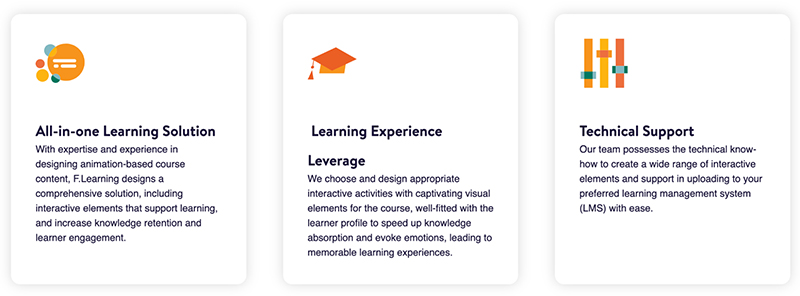
From creating interactive pieces to uploading them seamlessly into your LMS, we ensure a smooth process from start to finish.
This approach combines cost-effective solutions with top-notch quality, so we ensure you get high-impact content without stretching your budget.
interested to know more?
Glad you like us! Book a consultation call with us to explore how to kick start your animation project.
Corporate learning management systems can be a game-changer for training—when it has the right content. Interactive, tailored visuals make all the difference in keeping learners engaged and motivated. If you want to turn your LMS into a powerful learning experience, reach out to us! F.Learning Studio is happy to help you craft animation-based learning materials that are as effective as they are engaging.

F. Learning Studio's Author
Sean Bui, the founder and creative director of F.Learning Studio, is a respected leader in the e-learning and multimedia production industry. With over 10 years of experience, he has dedicated his career to helping organizations create engaging and impactful learning experiences. Under his leadership, F.Learning Studio has grown into a trusted partner for organizations in the education, healthcare, and corporate training sectors, producing over 2,000 minutes of educational animation.
Whether you’re training a team or explaining a message — we’ll help you do it clearly.
Clarity changes everything
Whether you’re training a team or explaining a message — we’ll help you do it clearly.