

A Guide to Cybersecurity Simulation Training with 6 Key Things
Cybersecurity simulations: 6 things you need to know for effective training. Prepare your team for any threat with this insightful guide. Start learning now!

Cybersecurity simulations: 6 things you need to know for effective training. Prepare your team for any threat with this insightful guide. Start learning now!
As hackers become smarter every day, staying a step ahead of cyber threats is essential, and cybersecurity simulation training provides the perfect practice ground. This type of training offers hands-on experience, helping employees recognize threats and respond quickly. In this article, we’ll explore the importance of cybersecurity simulation training and a step-by-step guide to creating a comprehensive training program.
Cybersecurity simulation training is a type of training involving realistic scenarios that simulate cyber attacks. This allows participants to practice identifying, responding to, and mitigating these threats without the risks associated with real attacks.
Key components of cybersecurity simulation training:
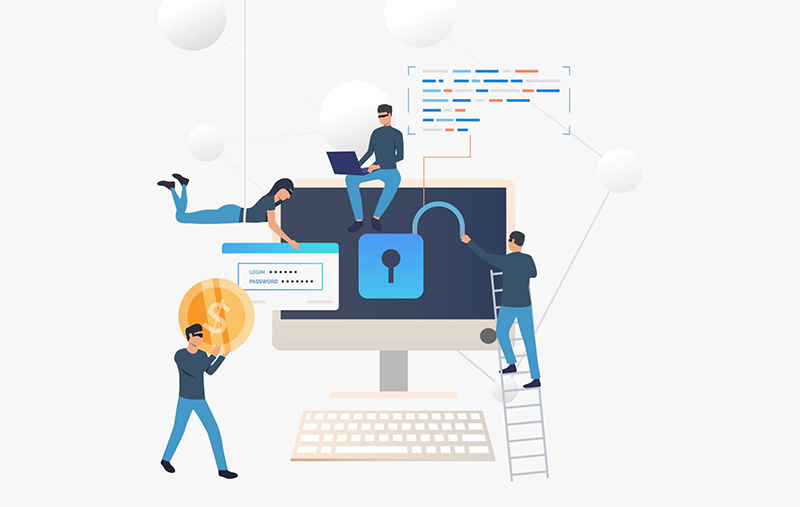
The best part about cybersecurity training is that it takes employees right into action, throwing them into scenarios that feel just like real cyber-attacks. This hands-on and immersive practice helps them spot vulnerabilities, learn the tricks cybercriminals use, and master their response strategies.
So, when a genuine cyber event happens, they’re not just ready—they’re prepared to outsmart the attack.
Simulated attacks give organizations a way to stay ahead of cyber threats. Instead of waiting for a real breach to reveal weaknesses, regular cybersecurity simulation training helps to catch vulnerabilities early. This lets businesses tighten up defenses before attackers even get close. With a proactive strategy like this, companies can reduce the risk of a successful attack.
Human error is a leading cause of data breaches, but with the right training, employees can become your strongest defense. By being exposed to realistic simulated attacks, your employees can spot and respond to attacks effectively. These simulations sharpen their instincts, teaching them to recognize suspicious activity, avoid phishing traps, and react under pressure.
Many industries have strict cybersecurity standards to meet, and compliance isn’t optional. By running regular simulations, companies can show they have strong security measures in place. Plus, these simulations make audits smoother, showing regulators that the organization is serious about security and well-equipped to meet compliance requirements.
Cybersecurity simulation training comes in various forms, so you may find it hard to make the decision. Below we collected the most popular ones to help you choose the right approach
| Training | Description | Focus | Example |
| Tabletop Exercises | Discussion-based sessions analyzing potential cyber-attack scenarios and response actions | Testing incident response and decision-making processes | Simulating a data breach to discuss containment steps and notifications |
| Blue & Red Team Exercises | Defensive training where the “Blue Team” (defenders) identify and respond to simulated attacks, defensive exercises with a “Red Team” (attackers) simulating attacks to expose security weaknesses | Strengthening detection and response capabilities & Identifying security weaknesses through testing | Blue team exercise: A simulated network attack requiring the team to identify, analyze, and respond.Red team exercise: Ethical hackers attempt to breach the firewall or access sensitive data |
| Red Team Exercises | Offensive exercises with a “Red Team” (attackers) simulating attacks to expose security weaknesses | Identifying security weaknesses through testing | Ethical hackers attempt to breach the firewall or access sensitive data |
| Phishing Simulations | Controlled phishing emails sent to test employees’ ability to recognize and report them | Increasing awareness of phishing tactics | Sending a fake email that mimics a phishing attempt to assess response |
| Social Engineering Awareness Training | Training focused on tactics used in social engineering to manipulate or deceive employees | Building awareness of social engineering methods | A simulated call from “IT support” asking for login credentials |
| Incident Response Training | Hands-on exercises guiding teams through the steps of responding to an incident | Improving speed and effectiveness of incident responses | A ransomware scenario where the team isolates systems, communicates, and initiates recovery efforts |
| Technical Cyber Exercises | In-depth technical simulations requiring skills in threat analysis and mitigation | Developing technical expertise in cybersecurity tools | A malware outbreak simulation requiring identification, quarantine, and eradication |
| Cyber Threat Hunting | Proactive exercises where teams search for hidden threats within the network | Enhancing threat detection skills for advanced threats | Searching for Indicators of Compromise (IoCs) in logs to identify signs of unauthorized activity |
To help you better implement cybersecurity simulation training into practice, below is an overview of how it works:
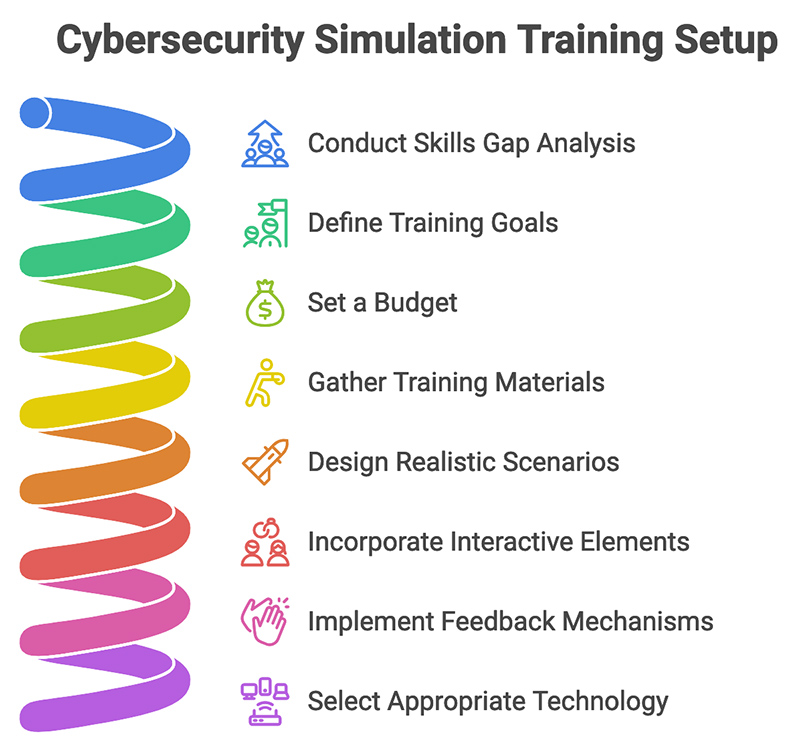
If you’re unsure how to get started, that’s totally fine. To give you a roadmap for building a comprehensive training program, here are the 10 steps that guide you through the process:
We, F. Learning Studio, believe that the training program should resonate with learners, so we tailor our solutions to fit your unique training needs, audience, and budget. Forget generic content—we work with you to build videos that speak directly to your team, covering real-world cybersecurity challenges in a way they’ll remember.
By focusing on what matters most to your organization, we help you deliver training that’s effective, targeted, and impactful.
Our team at F. Learning Studio knows that cybersecurity can seem dry and technical, so we bring it to life with top-notch animation and interactive design. We make complex topics easy to grasp, using engaging visuals and hands-on elements to keep learners tuned in.
It’s all about creating experiences that go beyond basic learning, ensuring employees walk away with a clear understanding of how to handle real cybersecurity threats.
Our flexible, structured process ensures your cybersecurity training solution is delivered efficiently, saving you time and resources. We keep you informed every step of the way, creating a smooth and effective journey to launch training that prepares your team to tackle cyber threats head-on.
interested to know more?
Glad you like us! Book a consultation call with us to explore how to kick start your animation project.
Investing in cybersecurity simulation training is necessary to equip your team with knowledge and skills that help them recognize and respond to real threats. This hands-on approach not only enhances their ability to handle potential attacks but also builds a proactive culture of security across your organization.
Whether you’re just starting to build a plan or looking to elevate your current training program, let’s make it effective, engaging, and impactful. F. Learning is here to help you achieve this. Partner with us to create tailored, engaging visuals that bring cybersecurity concepts to life, making training memorable and results-driven.

F. Learning Studio's Author
Sean Bui, the founder and creative director of F.Learning Studio, is a respected leader in the e-learning and multimedia production industry. With over 10 years of experience, he has dedicated his career to helping organizations create engaging and impactful learning experiences. Under his leadership, F.Learning Studio has grown into a trusted partner for organizations in the education, healthcare, and corporate training sectors, producing over 2,000 minutes of educational animation.
Whether you’re training a team or explaining a message — we’ll help you do it clearly.
Clarity changes everything
Whether you’re training a team or explaining a message — we’ll help you do it clearly.