

A Guide to a Successful Employee Onboarding Process for New Hires
New employee onboarding process is the practice of acquainting a new hire with a company and its culture. Let’s find out how to build a successful one with our blog.


New employee onboarding process is the practice of acquainting a new hire with a company and its culture. Let’s find out how to build a successful one with our blog.
The employee onboarding process at your corporation is your opportunity to make a good first impression on new staff. This process should aim to make the new employee feel welcomed, appreciated, and ready to do well in their new position. In this blog, let’s find out more details about a successful employee onboarding process.
A new employee onboarding process is the systematic conversion of suitable candidates into high-performing employees.
Companies give new employees the knowledge, connections, and equipment they need to feel confident enough to do excellent performance by carefully designing training steps. A bad employee onboarding process can result in early departures and high staff turnover. On the other hand, a positive one can set the stage for long-term happiness.
Recommend reading:
Wondering if you miss anything in your preparation to digitize your training? This is just what you need.
This is the 1st stage of the new employee onboarding process flow. New employee onboarding begins as soon as your employees are hired. When an employee is chosen through interviews, your company sends them an offer letter, policy papers, onboarding forms, and any other documentation that needs to be completed right away.
Maintaining a clear and transparent approach will assist your staff members in gaining trust and becoming acquainted with their new workplace.
Below is the checklist for offer release:
This is the 2nd stage of the new employee onboarding process flow. After receiving the offer letters, the very next step is waiting for your employees to accept the offers. At this point, your company may plan a phone call or a meeting to go over the previously agreed-upon policies, processes, benefits, and so on.
The active response and engagement of your company will improve employee retention and create strong relationships with them. This is a crucial stage in the employee onboarding procedure.
Below is the checklist for one week before hiring a new employee:

This is the 3rd stage of the new employee onboarding process flow. There is frequently a waiting time between when a staff accepts an offer and when he starts. Even if an employee accepts an offer, it does not guarantee that he will show up on the agreed-upon date. During the waiting period, it is critical to establish a connection with the employee.
The employee should be enthusiastic about joining the organization. As a result, when designing the onboarding process, you should account for the waiting period.
This is the 4th stage of the new employee onboarding process flow. The first day of work for any employee is critical. People are usually excited, happy, and nervous. As an L&D manager, it is your responsibility to make them feel at ease and welcome in the new office. This will give the new employees a sense of belonging.
After Joined Checklist:
Employee Checklist for New Hires:

This is the 5th stage of the new employee onboarding process flow. When a new hire starts a new job at the company, it is critical to notify the department in which the person will be working as well as the departments with which they will be coordinating.
The list could include the IT team, HR, subordinates, and managers. They can even assist in the decoration of the employee’s cubicle and the scheduling of orientation meetings for the new members of their team.
This is the final stage of the new employee onboarding process flow.
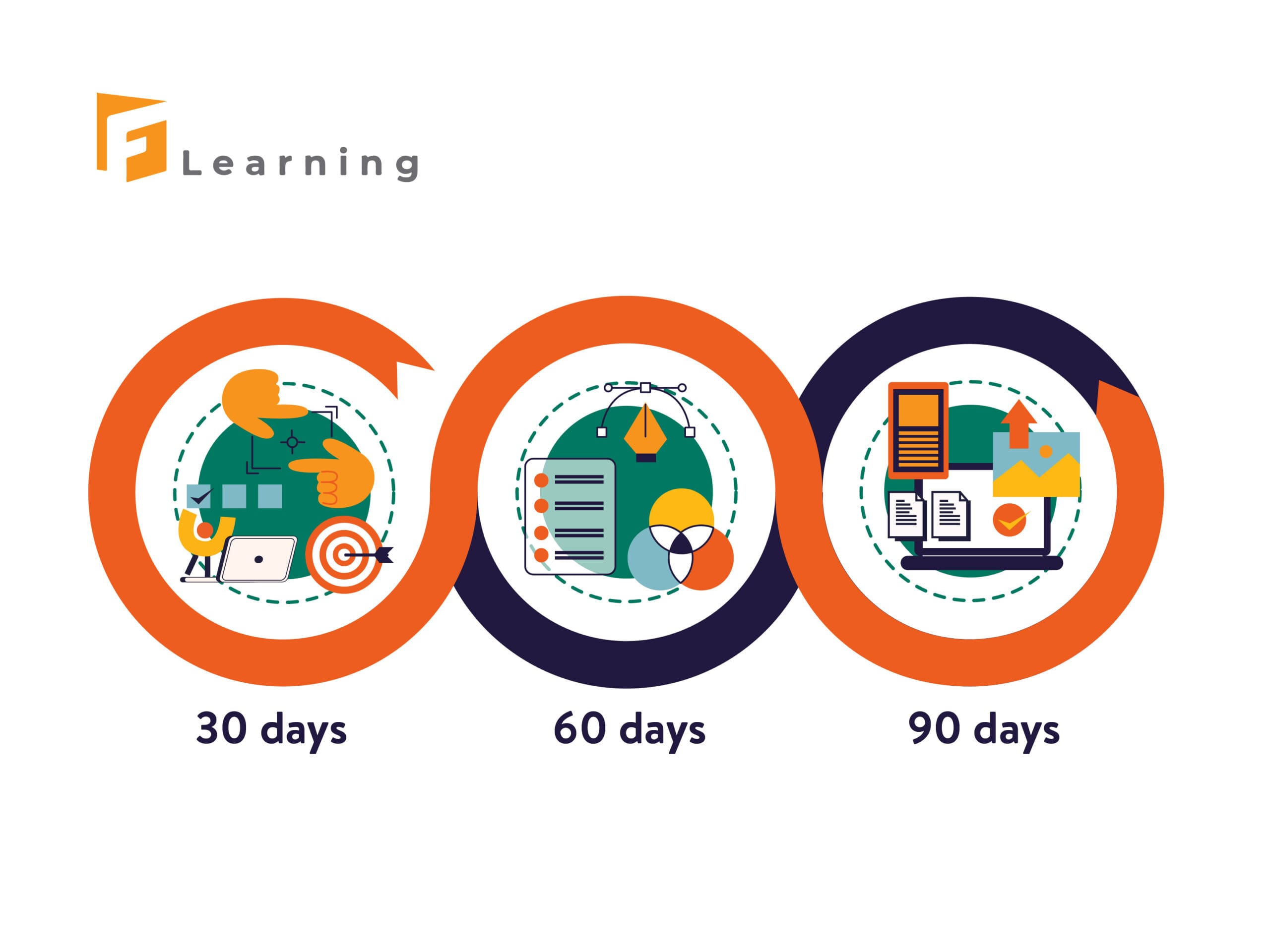
When a new employee is onboarded, it is critical to provide them with information about the corporate culture and their contribution as a staff. This is the appropriate time to introduce them to the company’s goals and provide them with pertinent information about the company’s teams. You can even set goals for the next 30, 60, or 90 days for your employees.
Orientation or training can help employees get up to full speed and get started quickly. It also provides them with access to and knowledge of the company’s operations.
Critical goal:
Express your sincere thanks and delight that your candidate chose you—likely from a huge list of other employers.
While extending a job offer implies that you value your new hire and their abilities, you shouldn’t rely solely on the offer to generate warmth and excitement. Nothing conveys the feeling that you can’t wait to work with someone more than a meaningful message.
Best practices include:
Critical goal:
Get the candidate excited while also reassuring them that they made the right decision to take chances in a new position.
When your applicant signs the offer letter, the employee onboarding process officially begins. The 2-3 week period between offer acceptance and start date marks an important opportunity for engagement. Take advantage of it.
Best practices include:

Critical goal:
Deliver a personalized experience that makes the new hire feel welcomed and appreciated. Planning plenty of one-on-one meetings with new colleagues makes the first day feel more meaningful rather than over-planned.
Best practices include:
Critical goal :
Help new employees understand what is expected of them in their new role while also imagining future possibilities.
Best practices include:

Recommend reading:
Critical goals:
Provide opportunities for new staff to form important relationships. While you cannot participate in networking for your new employee, you can certainly spice up your onboarding experience by providing opportunities for new employees to make connections throughout the office.
Best practices include:
If you are looking for a new employee onboarding app, just check this video out for a solution from the Microsoft teams.
Successful employee onboarding processes are a reflection of the time and effort invested in them. Take the time to think about it and do your homework. The first few weeks have the most influence on a new hire’s outlook on your company, whether positive or negative, and set the standard for their long-term relationship with your company.
If you want to simplify the onboarding process, check out our onboarding video solution for more information. It offers an engaging way to get your new hires to quickly be a part of your team. With attractive visuals and condensed information, animated videos are more fun to watch than heavy-text documents or boring training sessions.
Are you interested in our solution? Contact us now for a FREE consultation.
Read more:

F. Learning Studio's Author
Sean Bui, the founder and creative director of F.Learning Studio, is a respected leader in the e-learning and multimedia production industry. With over 10 years of experience, he has dedicated his career to helping organizations create engaging and impactful learning experiences. Under his leadership, F.Learning Studio has grown into a trusted partner for organizations in the education, healthcare, and corporate training sectors, producing over 2,000 minutes of educational animation.
Whether you’re training a team or explaining a message — we’ll help you do it clearly.
Clarity changes everything
Whether you’re training a team or explaining a message — we’ll help you do it clearly.