

Online Course Creation: A 11-Step-by-Step Guide (2025)
Follow this 11-step guide to online course creation in 2024. Plan, design, and launch with expert tips. Boost your eLearning strategy today!


Follow this 11-step guide to online course creation in 2024. Plan, design, and launch with expert tips. Boost your eLearning strategy today!
Online course creation has become an essential skill in today’s digital landscape, empowering educators and entrepreneurs alike. This article provides a comprehensive 11-step guide to create an online course, explores the best platforms for developing your course, and shares 5 effective ways to make your online course more engaging in 2025. Whether you’re a seasoned instructor or a beginner, these insights will help you successfully launch and promote your online course. Read now!
The online learning market has surged, valued at approximately $194.25 billion in 2022 and projected to reach $545.38 billion by 2030, growing at a CAGR of 13.81%. This growth highlights the importance of digital course creation, as it offers accessible and flexible education options for individuals and organizations.
With the global online education market expected to grow from $48.05 billion in 2023 to $270.32 billion by 2031, the demand for upskilling and reskilling in a dynamic job market continues to rise, making online courses essential for modern learners.
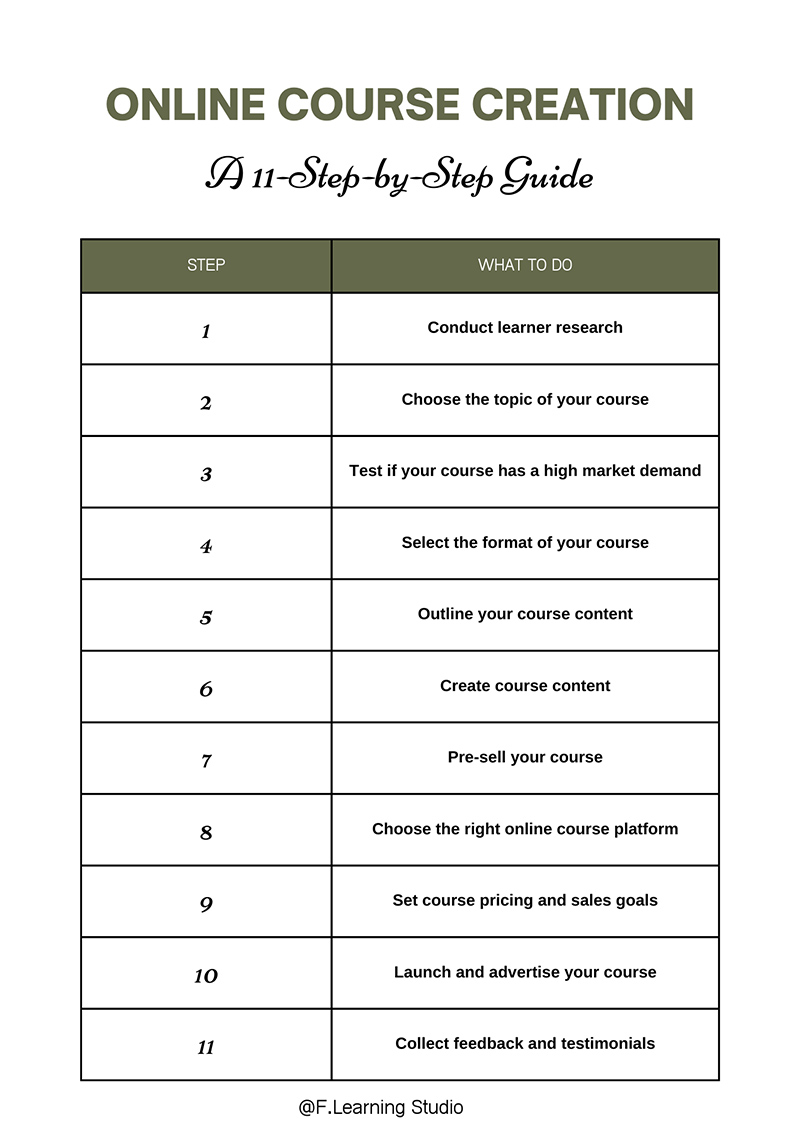
Conducting thorough customer research is essential for creating an e-course that meets the needs of your target audience. Here are key points to consider when researching your potential learners:

To gather valuable insights about your audience, consider these methods:

Selecting the right topic for your online course is crucial, as it sets the foundation for your entire eLearning experience. Here are 4 important factors to consider when choosing your course topic:
| Factor | Description |
| Passion | Choose a topic you are genuinely passionate about. Your enthusiasm helps create engaging content and keeps students motivated. |
| Skills | Consider your expertise in the topic. Strong knowledge allows you to provide valuable insights and practical skills to your learners. |
| Experience | Leverage your professional or personal experiences. Sharing real-world examples enhances your credibility and makes the course relatable to learners. |
| Target Audience | Research your target audience’s interests and needs. Understanding their pain points ensures the course topic resonates with them and creates a more successful learning experience. |

Before investing time and resources into creating online course content, it’s essential to evaluate whether there is sufficient market demand for your chosen topic. Understanding the demand will help ensure that your course aligns with the interests of potential learners. Here are some effective strategies to test market demand:

Choosing the right format for your online course is a critical step in the development of the online course process. The format you select will influence how you present your content and how learners engage with it. Here are the 3 main types of course formats to consider:
| Course Format | Description | Best For |
| Mini-Course | Typically short and focused on specific topics, lasting from a few hours to a couple of days. | Learners seeking quick, actionable insights. |
| Multi-Day Course | Offers a comprehensive learning experience over several days or weeks, covering various aspects of a subject. | Those looking for in-depth knowledge and skills development. |
| Masterclass | High-level courses featuring expert instructors and advanced content, suitable for learners with foundational knowledge. | Individuals wanting to deepen their expertise in a specific area. |
Creating a detailed outline for your course content is a crucial step in the online course creation process. A well-structured outline not only helps you organize your material but also enhances the learning experience for your learners. Here’s how to effectively outline your course content:
Start by dividing your course into manageable modules, each focusing on a specific theme or topic. Within each module, create lessons that delve deeper into the subject matter. For example, if your course is about digital marketing, one module could focus on social media strategies, while another addresses SEO techniques.
This modular structure allows learners to progress logically through the material, making it easier for them to absorb information and track their progress.

Once you have your modules and lessons outlined, consider the various formats for delivering each lesson. This is where you can incorporate a mix of educational approaches to keep your content engaging and effective. Some possible formats include:

Creating high-quality course content is the heart of your online education program. This step involves transforming your outline into engaging, informative materials that resonate with your learners. Here are some essential tips to help you effectively create your course content:

Pre-selling your course is a strategic way to gauge interest and generate initial revenue before your course launches. This approach not only helps validate your course idea but also allows you to build an audience eager to learn.

Selecting the right online course platform is crucial for effective course design and delivery. Below is a comparison table to help you evaluate different platforms and find the one that best fits your needs.
| Platform Type | Platform | Key Features | Pros & Cons | Pricing |
| Standalone | Thinkific | Customizable course website, supports multimedia content, free plan | Pros: Easy to use, no transaction fees on paid plans Cons: Limited marketing tools and integrations can be complex | Free plan, Paid plans from $36/month |
| Teachable | Supports unlimited students, integrated payment processing | Pros: User-friendly, built-in payment gateway Cons: Higher transaction fees on free plan, limited course design | Free plan, Paid plans from $39/month | |
| LearnWorlds | Interactive video features, social learning tools | Pros: Advanced video features, highly customizable course design Cons: Higher pricing, learning curve for beginners | Paid plans from $24/month | |
| Teachery | Simple course builder, no transaction fees | Pros: Affordable, very easy to use Cons: Lacks advanced customization options and integrations | Paid plans from $49/month | |
| All-in-One | Kajabi | Comprehensive marketing tools, CRM, sales funnel creation | Pros: All-in-one solution with strong marketing capabilities Cons: Expensive for small course creators | Paid plans from $149/month |
| Podia | Email marketing, digital downloads, webinar hosting | Pros: Affordable all-in-one option, no transaction fees Cons: Limited customization, fewer integrations compared to Kajabi | Paid plans from $39/month | |
| Kartra | Full suite of marketing tools, built-in CRM, landing pages | Pros: Highly integrated marketing and course creation tools Cons: Complex interface, more suited for advanced users | Paid plans from $99/month | |
| Online Course Marketplace | Skillshare | Creative courses, subscription-based access | Pros: Large student base, passive income potential Cons: Competitive, limited control over pricing and branding | Free to join, revenue sharing on sales |
| Udemy | A huge marketplace that supports different types of content | Pros: Large audience, easy to get started Cons: High competition, limited control over pricing, high transaction fees | Free to join, 50% revenue share on sales |
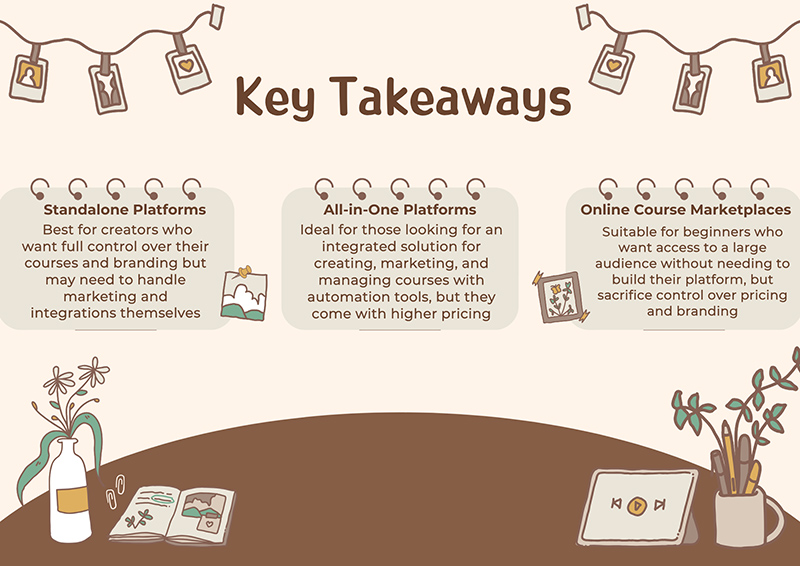
Choosing the right platform requires careful consideration of several factors. In this guide, you’ll learn how to create an online course by examining key elements that are presented below:
| Consideration | Description |
| Course Objectives | Choose a platform that supports your course’s learning goals. Look for features that match your needs, such as video hosting, assessments, interactive content, or certification options. Define whether your course is for beginners, intermediate learners, or advanced users to ensure the platform’s capabilities meet your objectives. |
| Ease of Use | Opt for a platform with an intuitive interface, allowing easy creation, organization, and management of course content without needing extensive technical skills. |
| Multimedia Support | Ensure the platform supports various multimedia elements like videos, animations, and interactive quizzes to enhance learner engagement. |
| Customization Options | Select a platform that offers flexible design tools and customization options to reflect your brand or teaching style. |
| Pricing and Scalability | Review the platform’s pricing plans and check if it can scale as your audience or course offerings grow. |
| Integration Capabilities | Ensure the platform can integrate with third-party tools like email marketing software, payment gateways, or LMS systems for smooth management and promotion. |
| Student Engagement Features | Choose a platform that provides features like discussion forums, feedback forms, and progress tracking to keep learners motivated and involved. |

Setting the right price for your course is crucial for balancing value and profitability. Start by analyzing your course’s content depth, the level of expertise offered, and the target audience’s budget. Research competitor pricing for similar courses, and consider offering tiered pricing or discounts to attract more learners. After finalizing your pricing, set realistic sales goals based on market demand and craft a marketing plan to promote your course effectively.
To advertise and sell your course successfully, you can:
| Promotion Strategy | Description |
| Create a Landing Page | Design a compelling landing page highlighting your course’s benefits and encouraging visitors to enroll. |
| Leverage Email Marketing | Build an email list and send regular updates or promotions to keep your audience engaged and informed. |
| Promote on Social Media | Use platforms like Facebook, Instagram, or LinkedIn to share content about your course and reach a broader audience. |
| Collaborate with Influencers | Partner with influencers or industry leaders to promote your course and build credibility. |
| Offer Affiliate Programs | Encourage others to promote your course by offering commissions for every sale they generate through an affiliate program. |
| Run Paid Ads | Invest in targeted ads on platforms like Google, Facebook, or Instagram to reach potential learners who are actively looking for courses. |
| Adopt SEO Tactics | Optimize your course page and content using SEO best practices to increase visibility and attract organic traffic. |
| Build a Content Marketing Strategy | Create valuable blog posts, videos, or podcasts that link back to your course, showcasing your expertise and driving potential customers to enroll. |
Once your course is ready, it’s time to launch and start attracting students. A successful launch requires more than just making the course available – it’s about creating buzz and excitement around it. Use the advertising strategies you’ve developed, such as leveraging email marketing, social media, and paid ads, to spread the word.
Offering early-bird discounts or exclusive bonuses can also encourage immediate sign-ups. The right launch strategy ensures your eLearning course reaches the right audience, setting the stage for strong enrollments from the start.

After your course is live, collecting feedback is crucial for continuous improvement. Reach out to your learners for their thoughts on the course structure, content, and overall experience. Positive feedback can be turned into testimonials, which are powerful tools for building credibility and attracting future students.
Negative feedback, on the other hand, can help identify areas for improvement. Actively listening to your audience not only strengthens your course but also enhances its long-term success in the education market.

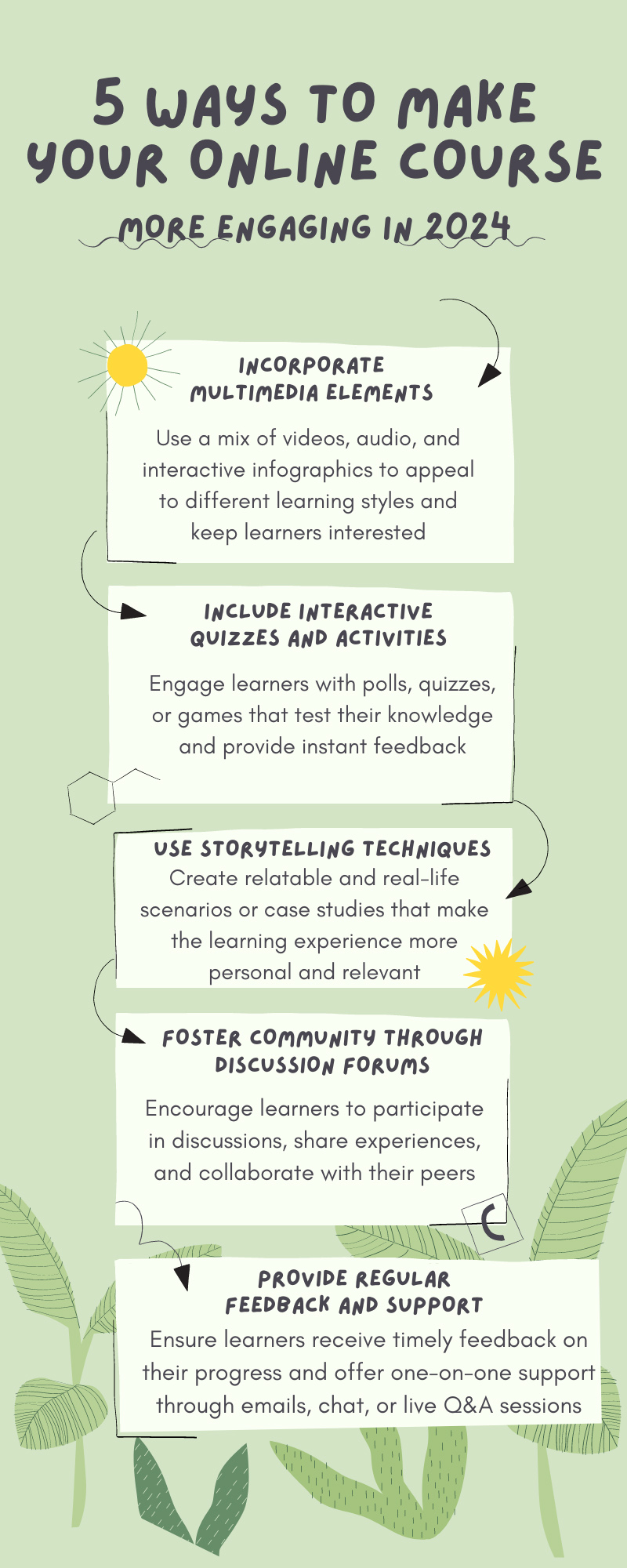
Keeping learners engaged is essential for the success of any online course. By incorporating interactive elements and thoughtful course design, you can create a more dynamic learning experience that motivates students to stay involved and complete the course. Here are 5 strategies to boost engagement in 2024.
At F.Learning Studio, we believe that the key to effective online education lies in delivering content that not only informs but also captivates learners. Our team focuses on creating engaging multimedia content by blending creative visuals, interactive elements, and structured learning designs. This approach ensures that your course resonates with learners and enhances their educational experience.
To support this process, we offer a range of specialized services that cover every aspect of multimedia creation:
Learning Design: We develop structured, learner-centric course plans that ensure the content flows logically and engages the target audience.
Visual solution:

Ready to Transform your training programs with interactive, high-quality eLearning content?
Partner with F.Learning Studio and bring your eLearning vision to life!
Whether you’re creating a mini-course, a masterclass, or an in-depth multi-day program, F.Learning Studio provides personalized solutions to suit your specific course type. We collaborate closely with you to ensure your course content aligns with your educational goals and delivers an exceptional learning experience. With our expertise in course creation, you can feel confident that your learners will stay engaged and achieve the outcomes you aim for.
F.Learning Studio has earned the trust of global clients by consistently delivering exceptional eLearning content that transforms traditional learning approaches. Our expertise spans a variety of industries, with each project tailored to meet the unique needs of our clients. Here are a few examples of our impactful work:
F.Learning Studio collaborated with ONE QBE Insurance Group, one of the world’s top 20 insurance companies, to revamp its outdated corporate training program. We developed a series of interactive, scenario-based training videos featuring high-quality animations. These dynamic simulations replaced traditional training methods, making the learning process more engaging and significantly improving knowledge retention across the workforce.
We animated staff training video for One QBE Group, attracting 14,500 employees globally
The University of New South Wales (UNSW) approached us to tackle the challenge of teaching complex scientific concepts. F.Learning Studio created a series of custom animations that visually represented intricate scientific processes, making abstract ideas easier for students to grasp. These animations were integrated into the curriculum, enhancing traditional teaching methods and resulting in improved student engagement, comprehension, and academic performance.

IntelyCare, a leader in healthcare staffing, faced challenges in training healthcare professionals on complex nursing procedures using static materials. F. Learning Studio developed a series of detailed, interactive nursing animations that provided clear, visual guides to medical scenarios. These custom animations allowed healthcare professionals to better understand and retain critical information, elevating the quality of their training programs.
This case study highlights our expertise in creating exceptional eLearning content to transform healthcare training and improve professional competencies
Online course creation is a powerful way to share knowledge and skills while building a scalable educational platform. From choosing the right topic to pre-selling and marketing your course, each step plays a critical role in ensuring the success of your eLearning program. By following this guide, you can create a course that not only resonates with your audience but also delivers real value.
If you need expert help in creating high-quality, interactive online courses, F.Learning Studio offers comprehensive services to bring your eLearning vision to life. Boost your education strategy today with engaging, tailor-made content designed to captivate and inspire your learners!
Still not sure which is the best option for your current budget?

F. Learning Studio's Author
Sean Bui, the founder and creative director of F.Learning Studio, is a respected leader in the e-learning and multimedia production industry. With over 10 years of experience, he has dedicated his career to helping organizations create engaging and impactful learning experiences. Under his leadership, F.Learning Studio has grown into a trusted partner for organizations in the education, healthcare, and corporate training sectors, producing over 2,000 minutes of educational animation.
Whether you’re training a team or explaining a message — we’ll help you do it clearly.
Clarity changes everything
Whether you’re training a team or explaining a message — we’ll help you do it clearly.